Maybe you have wondered why certain moments affect you so deeply, or why you find yourself reacting in ways you do not fully understand. Maybe you have carried the feeling that something in your family was difficult but you were never sure whether it was “serious enough” to count.
Trauma does not always begin with one dramatic event. Sometimes it grows through repeated relational patterns: a home filled with tension, feelings that were dismissed, conflict that never reached repair, silence around painful subjects, or needs that went unmet again and again.
When those experiences happen over time, they can shape what you learn about safety, love, responsibility and your own worth. You may learn to stay alert. You may become very good at reading the room. You may work hard to keep the peace, hide what you feel, or expect that your needs will become a problem for someone else.
None of this means there is something wrong with you. It may mean that you adapted to the emotional world around you as best you could.
Looking back can feel intense and confusing. You do not have to blame anyone or diagnose anyone. You are allowed to notice how the relationships around you may have shaped the ways you protect yourself, connect with others and respond when something feels uncertain.
Understanding where a pattern came from does not minimize its impact, excuse harm, or make you responsible for someone else’s choices. You can understand the past while still choosing safety in the present.
When your Experience is Connected to the Whole
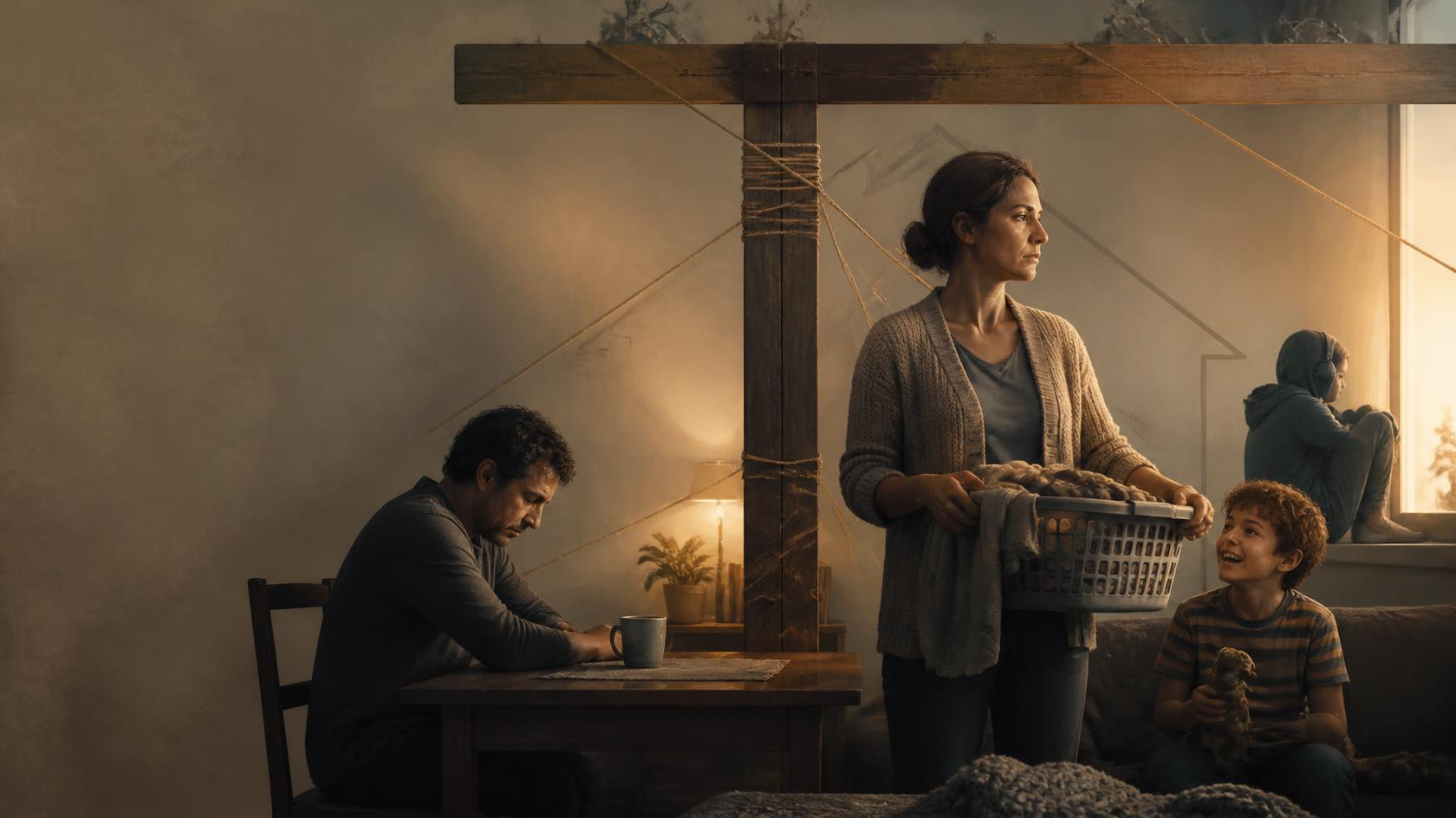
One way to understand family life is to see it as a system of interconnected relationships. You are your own person, with your own thoughts, feelings, and choices. And at the same time, you may have been affected by the expectations in your home, the way people handle stress, the alliances they form and the spoken or unspoken rules that shape closeness and conflict.
You may recognize a familiar pattern: one person becomes reactive, another goes quiet, someone else steps in to mediate and the household settles only when everyone returns to their usual positions. No one person creates the entire pattern alone. Yet each response can help keep it going.
When you notice the sequence, you may begin to see that a different response could become possible — not through forcing anyone else to change, but through choices that protect you.
Boundaries, safety, and connection
Healthy boundaries can protect your individuality while still allowing closeness, care, trust and accountability. Boundaries are the emotional, physical and practical limits that help you know where you end and another person begins.
You can have a different opinion without losing your right to belong. You can listen to someone’s feelings without becoming responsible for managing them. You can share what feels safe to share while keeping parts of your life private. You can say no, ask for space, or seek support without having to prove that your needs are valid.
Sometimes boundaries become rigid. You may learn to rely only on yourself, keep people at a distance, or treat vulnerability as dangerous. Sometimes boundaries become weak or enmeshed. You may feel expected to provide immediate access to your time, feelings, decisions, or private information. You may have been placed in the role of confidant, mediator, or emotional caretaker.
There is a compassionate distinction: a boundary is a limit you set around your own participation, availability, or wellbeing. It is not a demand that another person feel, think, or behave exactly as you do.
A boundary describes what you will do to care for yourself. It cannot guarantee that another person will approve or understand your boundaries, or change their behavior.
The Roles You Learned to Survive
When a family lives with ongoing stress, roles can emerge as attempts to create stability. You may become the dependable one, the quiet one, the person who absorbs criticism or the one who brings humor into a tense room. These roles are not fixed identities.
They are adaptive patterns — ways you may have tried to get through what you were living with, especially when you had little power to change the environment around you.
You may have been treated as the scapegoat, the person onto whom the family’s distress was placed. You may have learned to expect blame, been treated unfairly or doubted your own perspective.
You may have become the one who was responsible, successful, helpful, or mature beyond your years. Achievement may have brought approval and a feeling of control, while rest, mistakes, or receiving care may have felt unsafe.
You may have become the lost child, quiet, self-contained and easy to overlook. Solitude may have offered protection, even as you later found it difficult to ask for attention, name your needs or believe you were allowed to take up space.
You may have become the mascot, using charm, humor or lightness to ease tension. This quality can be a genuine strength but it can also make it harder for others to recognize when you are sad, frightened or in need of support.
You can move among these roles and you can experience different roles with different people. The qualities that once helped you cope may become limiting later in life: feeling overly responsible for others, independence can become isolation and humor can become a way of avoiding emotional honesty.
The Pull of What Feels Familiar
Families often fall into the same ways of dealing with stress. Triangulation happens when two people are having a problem, but a third person gets pulled into it. For example, when you were a child, you may have been asked to carry messages between adults, take sides, or comfort a parent when that support should have come from another adult.
Indirect communication happens when people avoid saying clearly what they mean. Instead, they may use hints, silence, criticism or pass messages through someone else. You may then spend a lot of energy trying to work out what someone really means, instead of having an open and respectful conversation.
Emotional suppression can teach you to hide fear, sadness, anger or disappointment so that everything appears calm. But feelings do not disappear simply because they are not spoken. They may surface later as numbness, resentment, physical tension or sudden reactions.
Escalating reactivity can begin when one person’s alarm activates another person’s defensiveness which increases the first person’s alarm. Soon the conversation becomes about winning, withdrawing or regaining control instead of understanding what anyone needs.
Many families also move toward homeostasis — the pull to return to a familiar balance. In a family organised around silence, your honesty may feel disruptive. In a family organised around rescuing, your independence may be treated as rejection. The old pattern may be painful but it is predictable. Change can feel threatening simply because it is new.
You do not have to analyse every interaction. You can begin by noticing the moment a familiar sequence starts, then asking: What would protect my wellbeing here? What would reduce harm? What choice is mine to make?
Power, Safety and Unequal Responsibility
Family dynamics are shaped by more than emotion. You may have been part of a family that called itself close while giving some people less voice, less privacy or less freedom than others. Rules may have applied differently depending on who was upset or who held authority. You may have been expected to protect a parent from consequences, care for adults before you were ready or stay quiet to avoid retaliation.
Connection is not truly mutual when you must surrender your choices to preserve peace, provide care to belong or hide your reality to stay safe. Your safety matters more than the appearance of family harmony.
Understanding why someone behaves a certain way does not mean you have to stay in contact with them, forgive them, share personal information, or rebuild a relationship if they continue to harm you or make you feel unsafe.
What Can Travel through Generations
Patterns can move through a family over time. Substance abuse, scapegoating, emotional absence, rigid gender roles, secrecy or conflict avoidance may appear in more than one generation.
Sometimes you repeat what you learned. Sometimes you can overcorrect and create a different kind of difficulty.
Family history does not have to decide your future. You can question inherited beliefs about love, conflict, success, privacy, and what you must do to receive care and love.
You don’t have to try and change your family. You can start with small choices, like pausing before you react, stopping yourself from over-explaining and asking whether a request is really yours to handle. You can decide how much time and energy you want to give and you can leave a conversation if it no longer feels safe.
What Awareness Can Make Possible
When you begin to notice unhealthy patterns in your family and relationships, confusing experiences may start to make more sense. You may realise that something happened around you, rather than believing there is something wrong with you. You can also learn the difference between being responsible and being blamed, caring about someone and neglecting yourself and understanding another person without taking responsibility for their choices.
Awareness can give you a pause where there used to be an automatic reaction. In that pause, you may choose a response that reflects your values and your present circumstances rather than an old role.
You may decide what information you are willing to share. You may step away from an argument before it becomes harmful. You may build relationships with people who respect differences, consent and accountability.
Ask Yourself: What family pattern am I starting to notice and what compassionate choice can I make for myself now?
Healing from Family Dysfunction
You do not have to perfectly understand your family in order to begin healing. You do not have to make every memory make sense, find the perfect explanation or maintain contact with people who harm you.
Healing may look like offering yourself more honesty than you were once taught to offer. It may look like protection instead of self-abandonment, compassion instead of shame, and care instead of constantly proving that you are worthy of it.
You can honour the ways you adapted without remaining trapped inside them. You can understand where a pattern came from without accepting it as inevitable. You can acknowledge its impact without minimising it. You can hold compassion for the people involved without excusing harm or giving up your right to safety.
So, as you move forward, take this with you: Your history may help explain you, but it does not own you. The past may have shaped your first responses, but it does not have to choose your next one.
And perhaps, today, your compassionate choice is simply to listen inwardly and believe what you notice. Perhaps it is to pause, set a limit, ask for support or take one step towards a life where your needs, your voice and your safety are allowed to matter.
You are allowed to become someone who offers yourself the honesty, protection, compassion and care you may once have been taught to expect only from others.
Final Word…
If this helped you understand your experiences with more compassion, I invite you to subscribe to my YouTube Channel. Your healing deserves care, clarity and encouragement and I’d be honoured to have you here as we take those steps together.
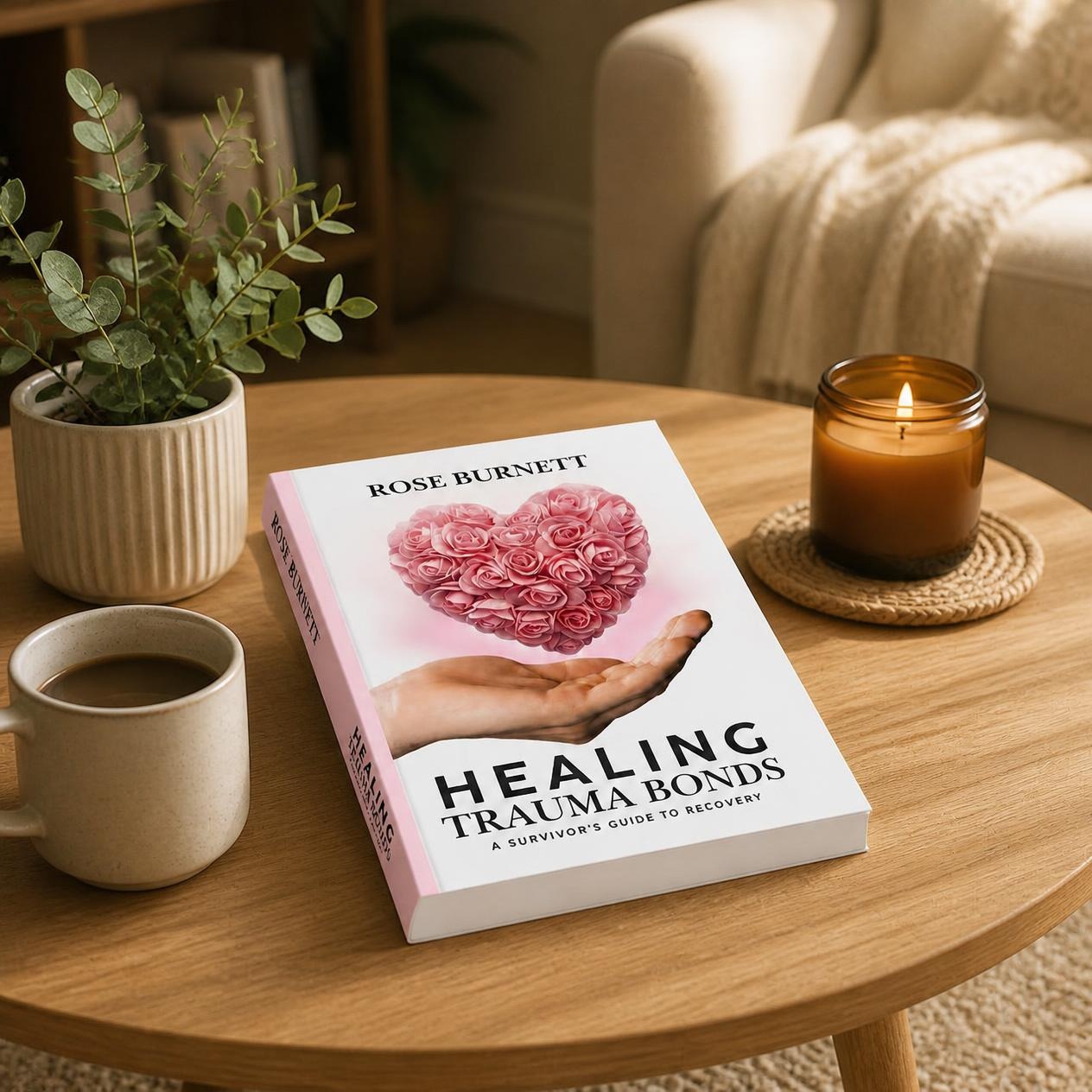
If you want to take it one step further, my new book ‘Healing Trauma Bonds: A Survivor’s Guide to Recovery’ explores growing up in a dysfunctional family and the lasting impact on your sense of identity, self-worth and patterns that keep you stuck in trauma bonds.
It takes you on a journey of self-discovery personalised to your own experiences and speaks to anyone seeking understanding, healing and freedom.
About Rose Burnett
Rose Burnett is a Psychic Medium, Author, Certified Transformational Coach, Neuro-Linguistic Programming practitioner, and Advanced Reiki Practitioner with more than 14 years of experience in mindset coaching.
Her work supports people on a deeply personal journey of awareness, healing, and self-discovery. Drawing on her experience in mindset coaching, inner child healing, family systems, trauma recovery, mind-body-soul balance, lifestyle coaching, and psychic development, Rose helps others reconnect with their inner wisdom and create meaningful, lasting change.
At the heart of Rose’s work is the belief that healing begins with self-awareness and grows through compassion, courage, and a willingness to look within. Rose also has an inspirational YouTube channel with more than 99,400 subscribers and over 8 million views.
Instagram | Facebook | eBooks & Masterclasses | Books on Amazon